Cheesy Broccoli Casserole Recipe
Introduction
A classic cheesy broccoli casserole provides a satisfying, high-protein comfort food side dish that pairs perfectly with almost any main course. This guide covers how to prepare an easy broccoli cheese casserole recipe from scratch using reliable techniques for optimal texture and flavor.
You will learn the best methods for preparing fresh broccoli to achieve a tender-crisp result, along with instructions for crafting a smooth homemade broccoli cheese sauce. The article details the standard baking temperature of 350 degrees F to ensure an even cook and offers tips on choosing the best binders and toppings, such as breadcrumbs or crushed crackers. Whether you prefer a traditional approach with condensed soup or a version made with a roux, you will find clear steps to create a consistent and delicious baked broccoli and cheese side dish. Finally, the post provides verified guidance on storing leftovers safely in the refrigerator.
Ingredients for Broccoli Casserole
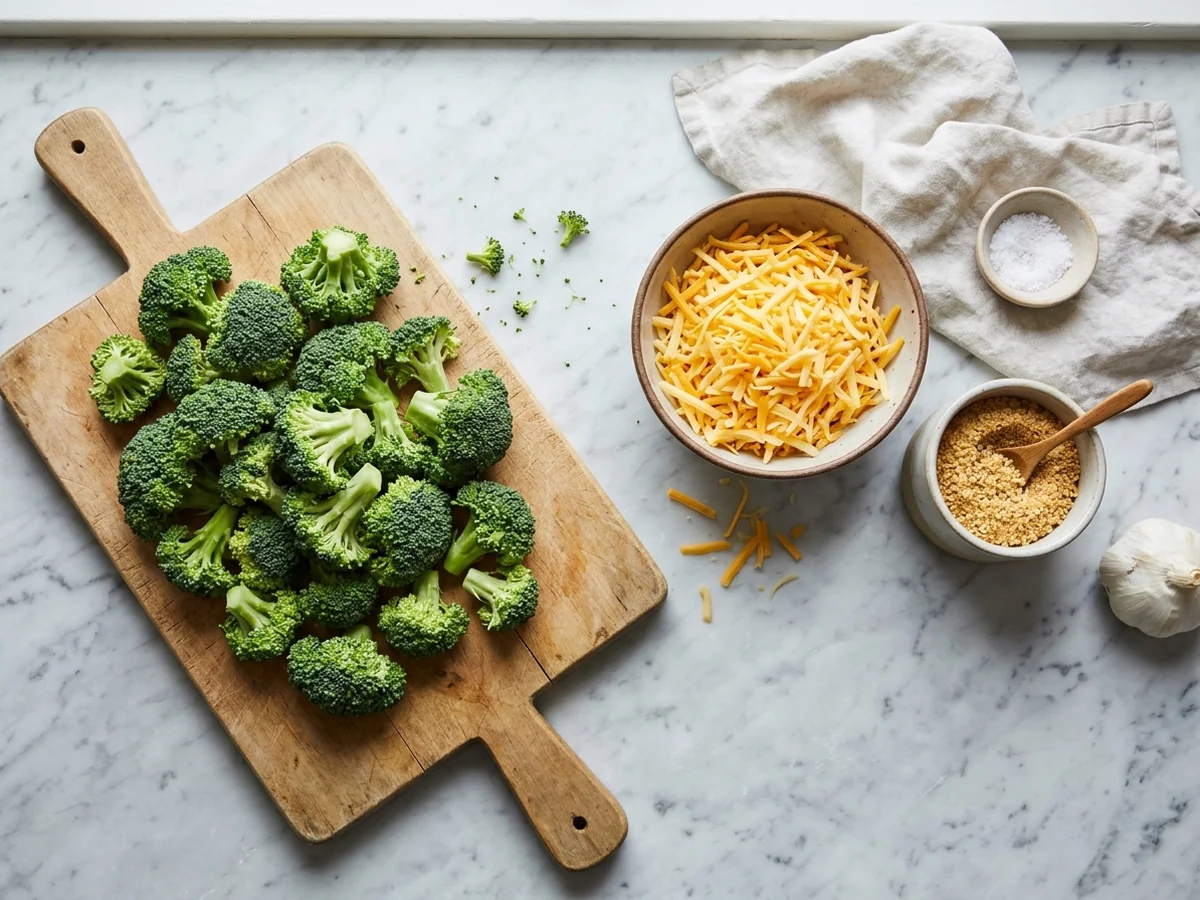
You need a balance of fresh vegetables, a rich binding agent, and a crisp topping to assemble a satisfying baked broccoli and cheese side dish. These components ensure the final result is creamy, flavorful, and structurally sound for any meal.
The foundation of this dish relies on quality produce and pantry staples. While specific preferences vary, common guidance suggests using the following items to build your base:
- Fresh broccoli florets, ideally blanched or steamed for about 2 minutes to achieve a tender-crisp texture.
- A creamy binder, such as condensed cream of mushroom soup, or a homemade roux prepared with butter, flour, milk, and half-and-half.
- Shredded cheddar cheese or parmesan cheese to provide a sharp, savory flavor profile.
- Beaten eggs, which are essential for binding the ingredients together effectively during the baking process.
- Cream cheese, often incorporated into scratch-made sauces to enhance overall creaminess and improve the texture.
- A crunchy topping, such as traditional breadcrumbs, crushed buttered crackers, or even ridged potato chips for a modern twist.
Preparation is key when working with raw vegetables. If using fresh florets, always remember that blanched broccoli should be placed in ice water immediately to stop the cooking process. This simple step prevents the vegetable from becoming mushy once it enters the oven.
Once your ingredients are prepared, you will combine them in a standard casserole dish. Following the standard baking temperature for broccoli casserole of 350 degrees F ensures even cooking throughout. For the best texture, monitor the dish closely as the baking time typically ranges between 45 and 60 minutes.
Preparing Fresh Broccoli
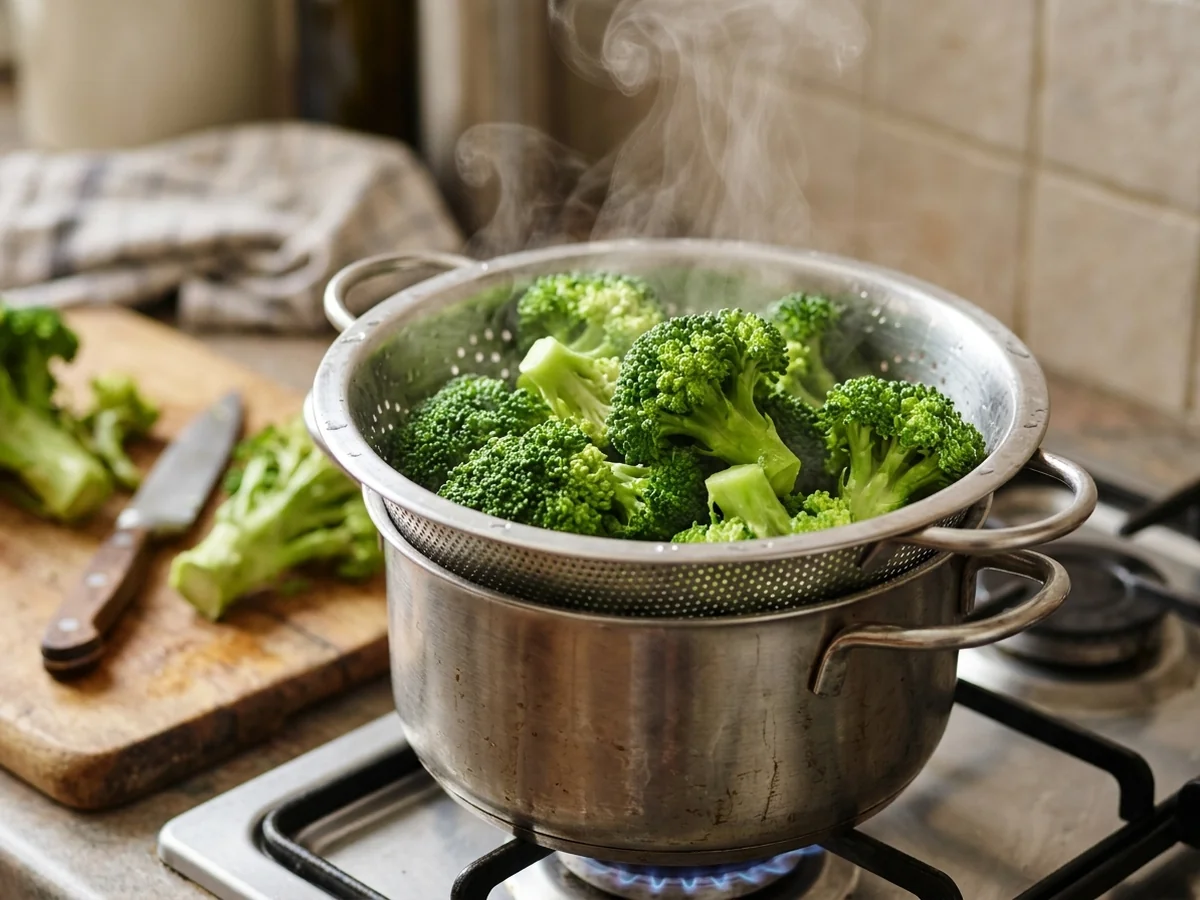
Blanching is the best way to ensure your vegetable pieces maintain a perfect tender-crisp texture throughout the baking process. Without this step, your florets may turn mushy or stay unpleasantly fibrous under the cheese sauce.
To achieve the ideal consistency, steam the fresh florets for approximately 2 minutes. This brief exposure to heat softens the stems just enough while keeping them firm enough to hold their shape in the final dish.
Immediately after the steaming period ends, you must transfer the broccoli into an ice water bath. This is a necessary step according to NCHFP guidelines to stop the cooking process instantly, which prevents the vegetable from overcooking and losing its vibrant color.
- Cut the broccoli into uniform, bite-sized florets for even cooking.
- Steam for 2 minutes until bright green and slightly tender.
- Shock in ice water to lock in the texture and color.
- Drain thoroughly to remove excess moisture before combining with other ingredients.
Draining the water completely is just as important as the blanching process itself. Excess liquid left on the florets can water down your sauce, so pat the pieces dry with a clean kitchen towel or paper napkin once they have cooled in the ice bath. This preparation ensures your baked broccoli and cheese side dish remains creamy and flavorful without becoming runny.
Choosing Your Sauce Base
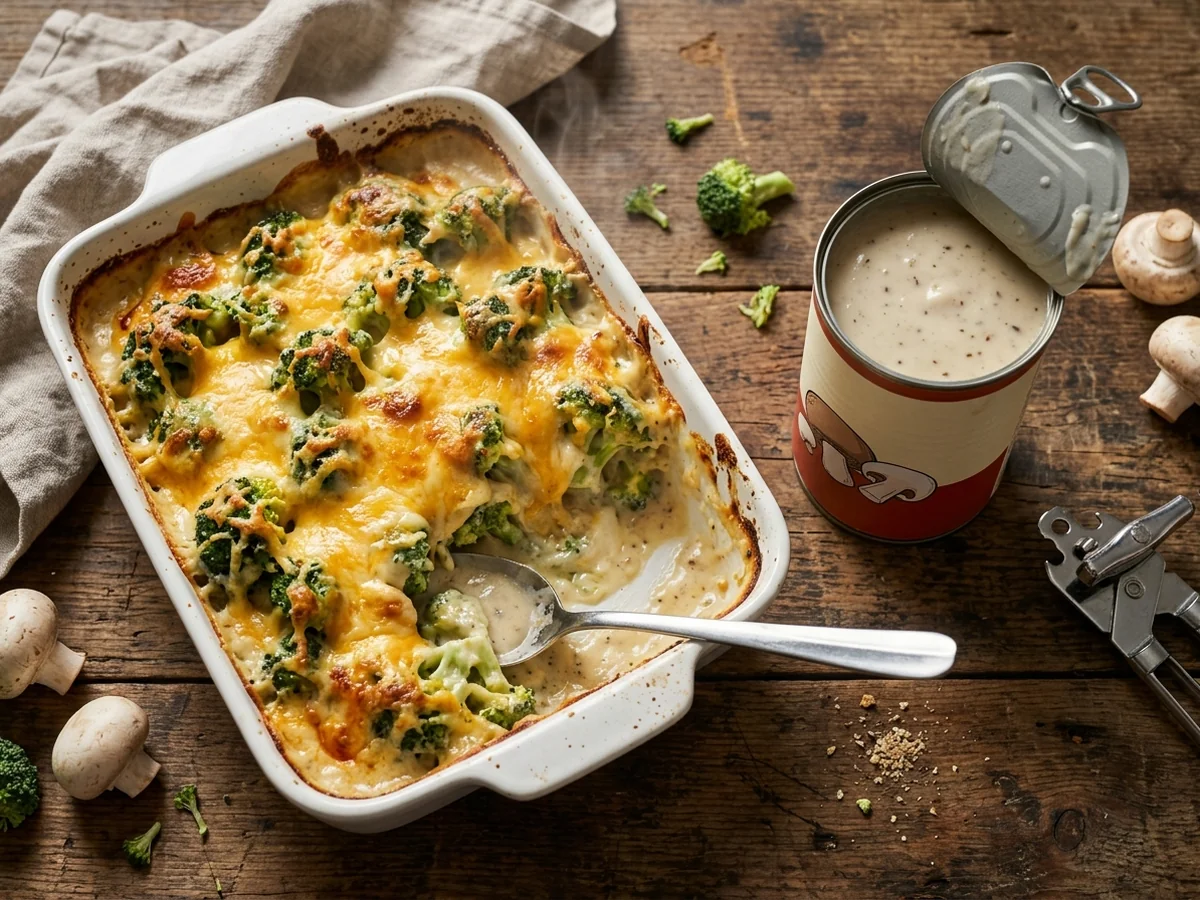
The foundation of a quality cheesy broccoli casserole depends on whether you prefer the speed of a pre-made binder or the flavor control of a cooked sauce. Choosing the right method determines the texture and richness of your final dish.
Condensed cream of mushroom soup is a common guidance for those seeking a quick, convenient binder. It provides immediate thickness and a savory depth, making it a popular choice for traditional recipes. However, those looking to prepare a broccoli casserole without cream of mushroom soup often opt for a scratch-made approach to better control sodium levels and ingredient quality.
A roux-based sauce is the standard method for achieving a restaurant-quality finish from scratch. This process involves the following components:
- Butter to create the fat base
- Flour to thicken the mixture
- Milk and half-and-half to build the creamy liquid body
When preparing this homemade broccoli cheese sauce, you melt the butter and whisk in the flour to cook out the raw starch flavor before gradually adding your dairy. This technique creates a smooth, stable consistency that coats the vegetables evenly during the long baking process. Once the roux is thickened, you can stir in your preferred cheeses to melt them into the base.
Many cooks also incorporate cream cheese into their scratch-made sauces. It is common guidance to use this addition specifically to enhance the overall creaminess and stabilize the texture of the sauce. The result is a luxurious, velvety coating that holds up well under the heat of the oven, ensuring your side dish remains cohesive and satisfying.
Binding Cheesy Broccoli Casserole
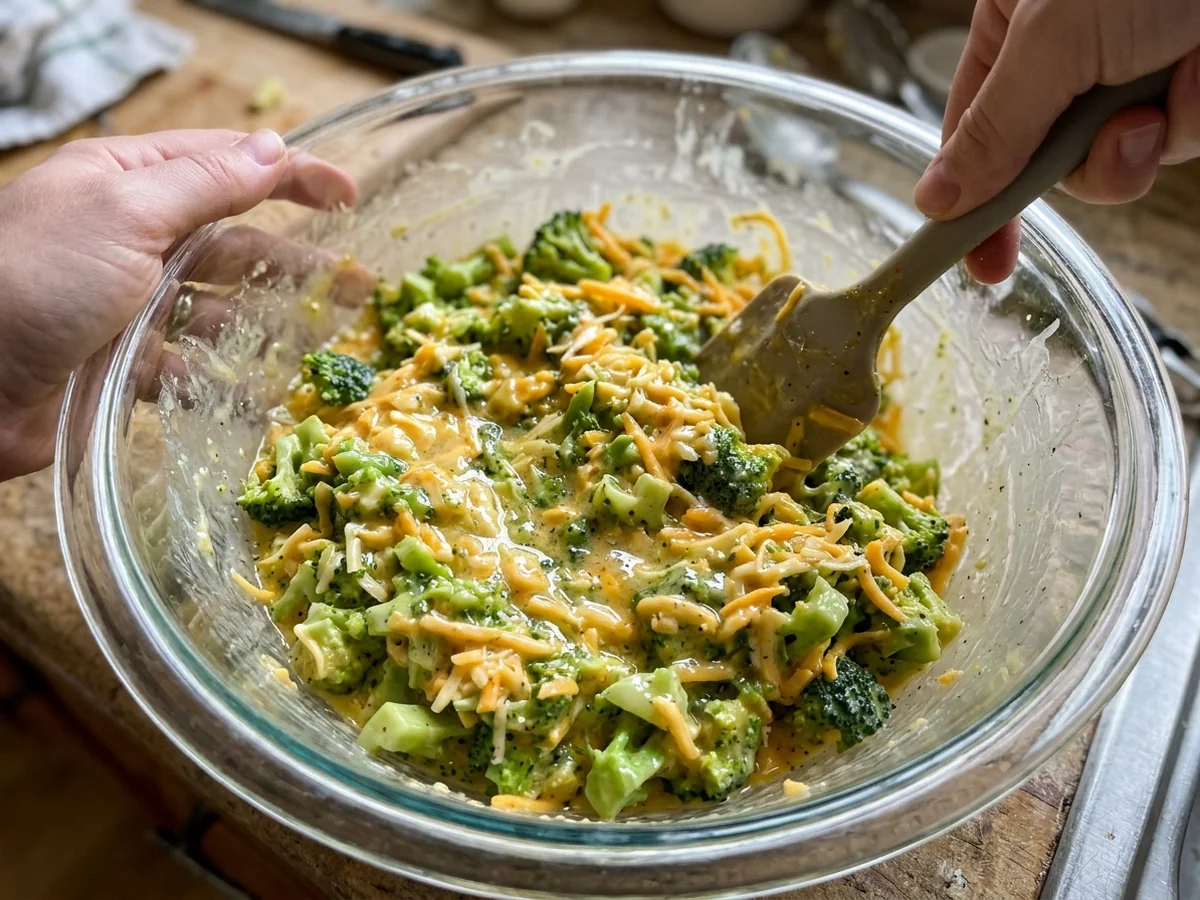
Beaten eggs are used in many recipes to help bind the ingredients together during the baking process. When they are thoroughly incorporated into the mixture, they act as a structural agent that ensures the final dish sets properly, allowing for clean slices when served.
Consistent results rely on using the correct heat level. According to research from South Dakota State University, the standard baking temperature for a vegetable-based bake is 350 degrees F. Maintaining this steady heat allows the eggs to coagulate and proteins to firm up without causing the edges to burn before the center is cooked through.
When preparing this easy broccoli cheese casserole recipe, you can expect a typical baking time ranging between 45 and 60 minutes. Because individual ovens vary in their heating efficiency, checking the dish for a golden-brown top and a set center toward the end of this window is recommended.
Proper binding ensures a cohesive texture rather than a loose, watery one. While other ingredients like condensed soups or a roux base add richness and body, the addition of eggs provides the necessary stability for a firm, satisfying result that holds its shape on the plate.
Perfecting the Casserole Topping
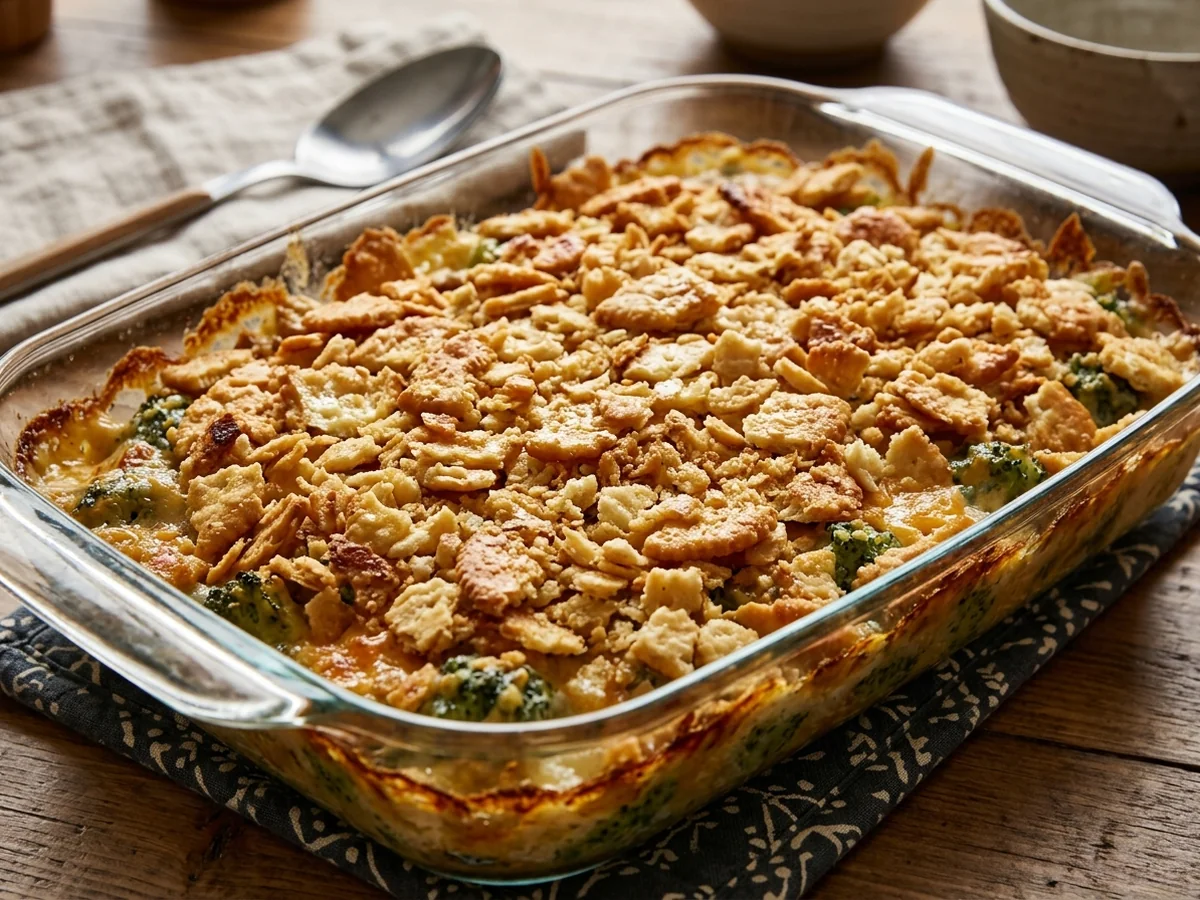
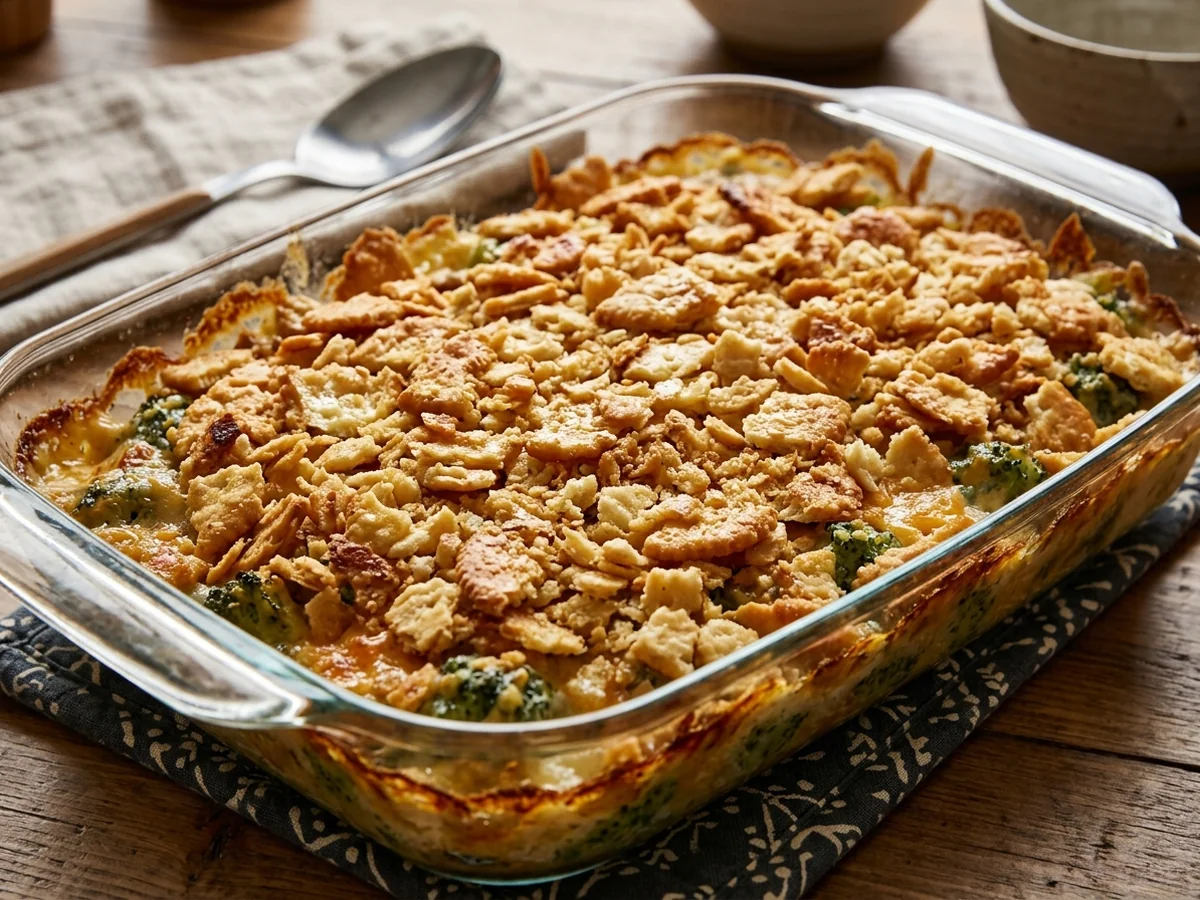
You can achieve a golden, crunchy finish for your cheesy broccoli casserole by choosing a topping that balances texture with heat resistance. While traditional breadcrumbs offer a classic, fine-grained crunch, crushed buttered crackers provide a richer, more buttery flavor profile that holds up well against the creamy base.
If you prefer a unique, intense crunch, ridged potato chips are a common alternative. Their thick structure and saltiness create a distinct texture that contrasts beautifully with the tender vegetables. Because they are already crisp, they add a robust element to the dish that holds its own even after extended baking time.
To ensure your topping reaches a perfect golden brown without burning, follow these simple guidelines:
- Add the topping during the final 10 to 15 minutes of the total cooking time if you notice it browning too quickly.
- The standard baking temperature for broccoli casserole is 350 degrees F to ensure even heat distribution.
- Cover the edges of the casserole dish with foil if the crust is browning faster than the center is setting.
- Use a light dusting of parmesan cheese mixed into your breadcrumbs or chips to encourage a deeper, uniform color.
Monitoring the oven closely during the final stage of baking helps maintain the ideal balance between a bubbly filling and a crisp, golden lid. Whether you choose refined crumbs or bold chips, the goal is to create a satisfying final bite that complements the creamy, savory interior of the baked vegetable dish.
Common Broccoli Casserole Mistakes
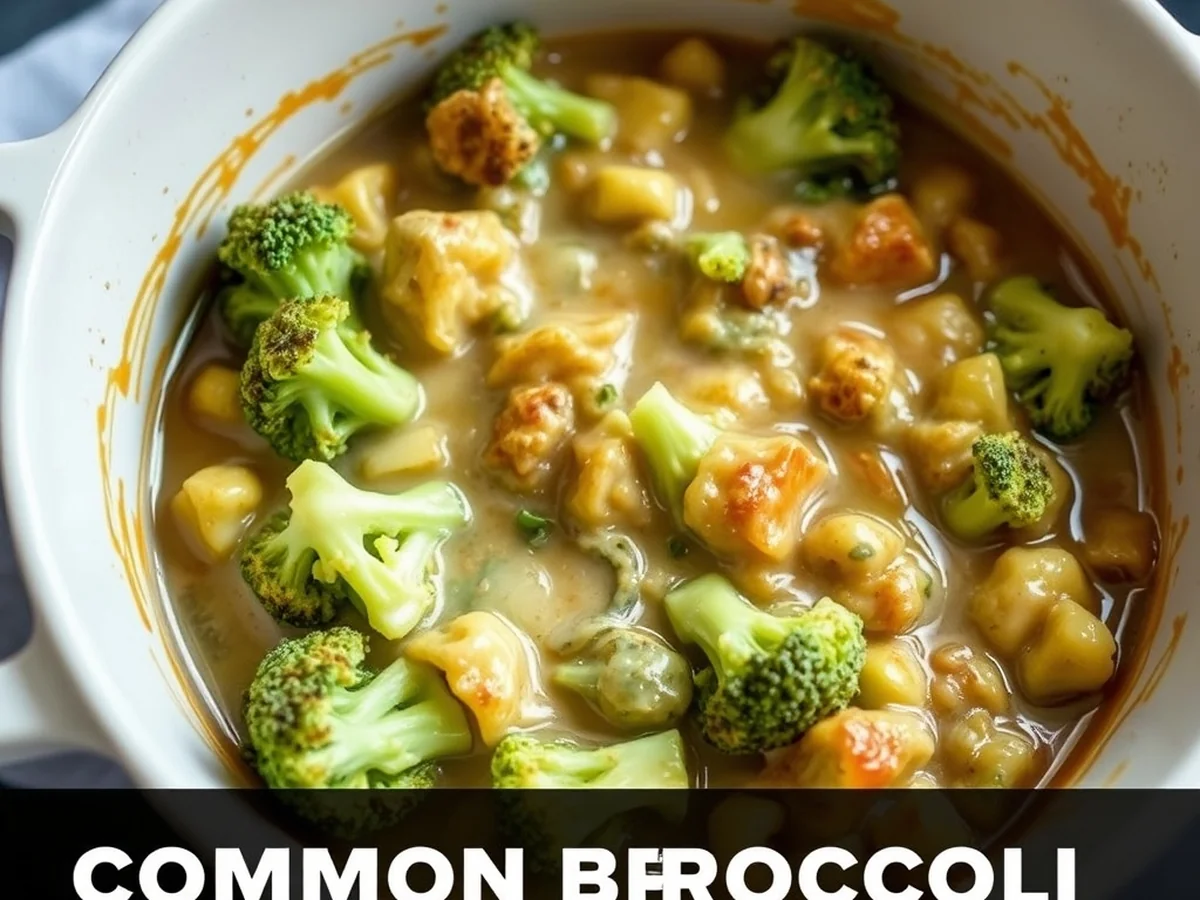
The most frequent errors when preparing this cheesy broccoli casserole involve moisture control, ingredient preparation, and temperature regulation. Managing these factors ensures your meal reaches the table with a cohesive texture rather than a watery base.
Using frozen vegetables requires extra care because they release significant liquid as they thaw. To prevent a thin or broken sauce, drain the frozen florets thoroughly after thawing and pat them dry with a clean kitchen towel before adding them to your mixture. Fresh broccoli, by contrast, benefits from being blanched or steamed for approximately 2 minutes to achieve a tender-crisp texture. Following this blanching technique, place the florets in ice water immediately to stop the cooking process. Overcooking the vegetable before it enters the oven often results in mushy, unappealing bites once the final dish is finished.
Achieving the right sauce consistency is equally critical for a successful bake. Common guidance suggests that if you are using a homemade roux made with flour, butter, milk, and half-and-half, ensure the liquid is incorporated gradually to maintain a smooth emulsion. Should your sauce break or appear watery, it is often due to excess steam trapped beneath the surface or too much moisture released from the vegetables. While condensed cream of mushroom soup is a common binder for traditional versions, be aware that these products have different water contents than a scratch-made sauce. Consistency remains key to ensuring your meal holds together in the casserole dish without turning soupy after resting.
Storing Your Broccoli Casserole
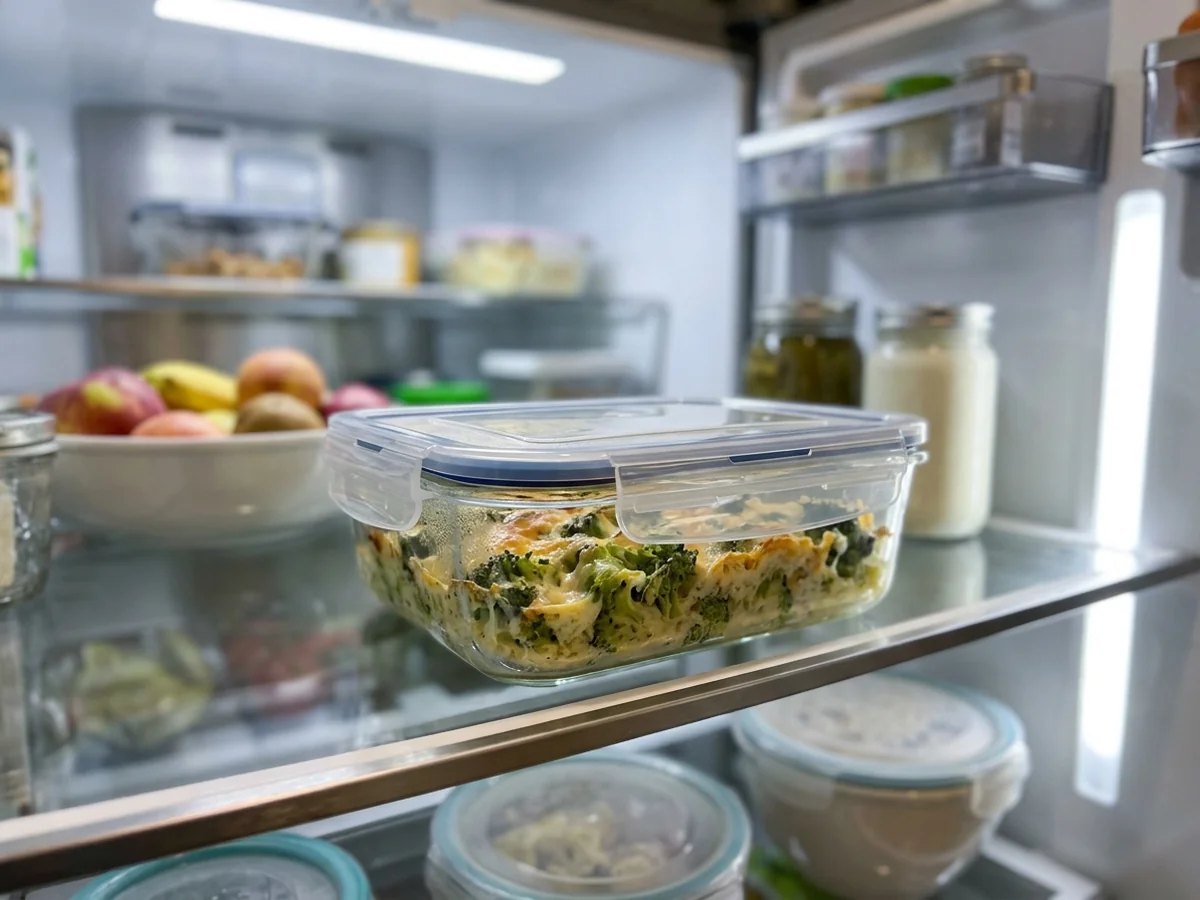
You should store your leftover cheesy broccoli casserole in an airtight container within the refrigerator for 3 to 4 days. This window ensures the dish remains safe to eat according to guidelines from the USDA.
Place the casserole in the refrigerator as soon as you finish your meal. Leaving food at room temperature for too long encourages bacterial growth, so avoid letting the dish sit out on the counter after serving.
When you are ready to enjoy your leftovers, proper reheating is key to maintaining the texture of the sauce and the crispness of any topping. Follow these tips to ensure the dish heats evenly without becoming dry or mushy:
- Use a low oven temperature, such as 300 degrees F, to warm the casserole gradually.
- Cover the dish with foil while reheating to prevent the top from burning before the center is hot.
- Add a small splash of milk or broth if the sauce appears to have thickened too much in the fridge.
- If you prefer the microwave, use a medium power setting and stir the contents halfway through to prevent hot spots.
Avoid reheating the entire casserole if you only plan to eat a single serving. Portioning out individual servings helps keep the remaining dish chilled and prevents repeated temperature fluctuations, which helps preserve the quality of the ingredients.
Broccoli Casserole Recipe Variations
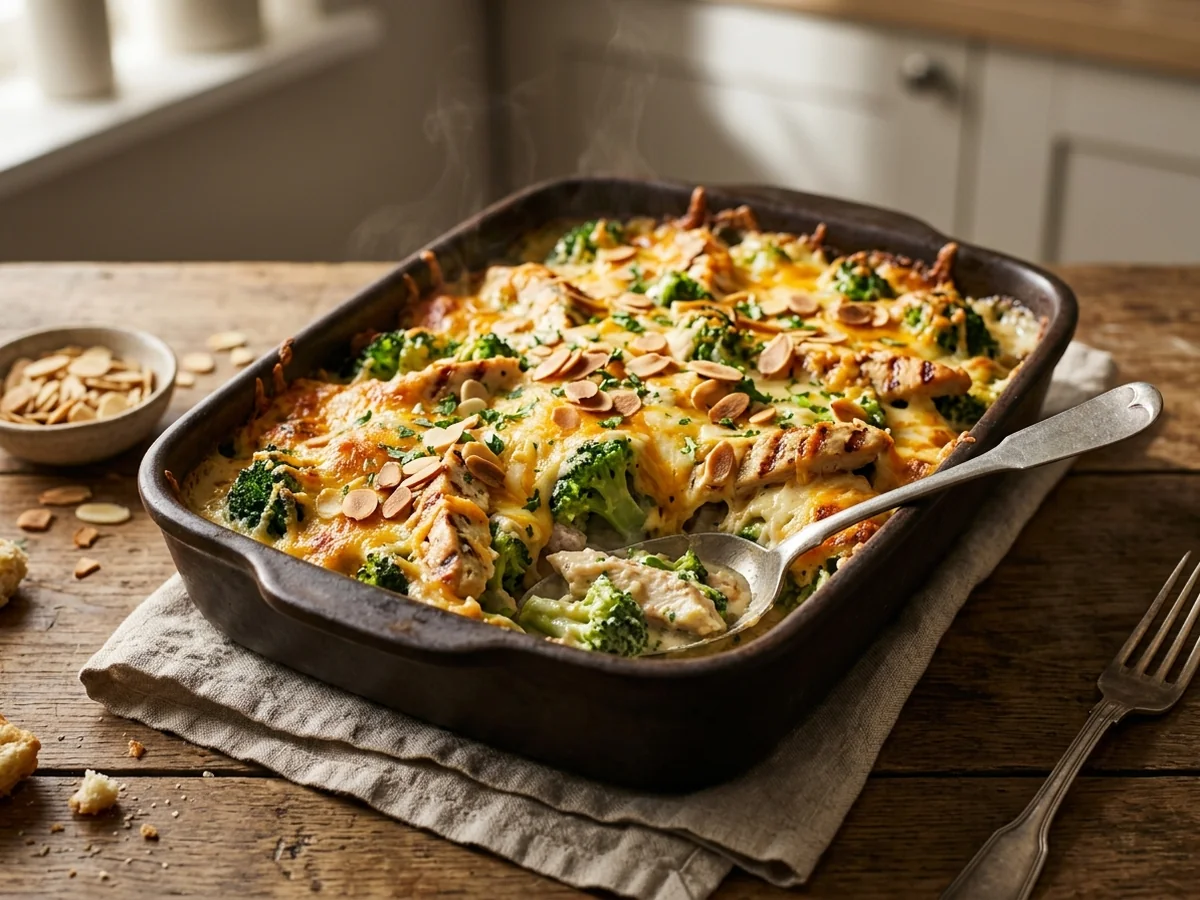
You can transform this dish into a hearty main course or customize the flavor profile by adjusting the base ingredients. These modifications allow you to adapt the meal for busy weeknights or specific taste preferences while keeping the preparation straightforward.
Consider these adjustments to tailor your baked vegetable dish to your nutritional goals or flavor cravings:
- Incorporate diced cooked chicken or turkey breast to create a protein-packed main dish that satisfies as a complete meal.
- Mix in cooked white or brown grains to prepare a filling broccoli casserole with rice that absorbs the savory sauce perfectly.
- Swap standard mild dairy options for sharp cheddar cheese to provide a bold, tangy kick that cuts through the creaminess.
- Introduce grated parmesan cheese into the mixture or as a topping for a salty, nutty depth of flavor that browns beautifully under the broiler.
- Use a combination of Gruyere and Swiss if you prefer a sophisticated, melt-in-your-mouth texture that complements the earthy vegetable notes.
- Add a sprinkle of smoked paprika or red pepper flakes to the cheese sauce if you enjoy a subtle heat in your comfort food.
When adding extra bulk like poultry or grains, ensure these components are fully cooked before combining them with your raw or blanched vegetables. This keeps the final bake time consistent and prevents the dish from becoming overly watery. Adjusting the ratio of sauce to solids ensures every bite remains cohesive and flavorful regardless of the specific add-ins you choose.
FAQ
What temperature should I bake the cheesy broccoli casserole at?
The standard baking temperature for broccoli casserole is 350 degrees F. Maintaining this heat ensures the ingredients cook evenly without drying out the sauce.
How long should I bake the casserole?
Baking time for broccoli casserole at 350 degrees F typically ranges between 45 and 60 minutes. You will know it is finished when the center is hot and the top is golden brown.
How do I prepare fresh broccoli for a casserole?
It is common practice to steam or blanch fresh broccoli for approximately 2 minutes before baking to reach a tender-crisp texture. Once finished, the blanched broccoli should be placed in ice water immediately to stop the cooking process.
Can I substitute ingredients like cream of mushroom soup?
While condensed cream of mushroom soup is a common binder for traditional broccoli casserole, you can easily create a homemade broccoli cheese sauce instead. A roux-based sauce typically uses flour, butter, milk, and half-and-half, and many cooks add cream cheese to enhance the texture.
How long can I store leftover broccoli casserole?
Leftover broccoli casserole should be stored in the refrigerator in an airtight container for 3 to 4 days. Always ensure the dish is cooled properly before moving it to the fridge to maintain food safety.
What can I use for a crunchy topping?
While breadcrumbs or crushed crackers are popular choices, ridged potato chips are a viable alternative to add a salty, crispy finish. Simply crush them slightly and sprinkle over the cheese layer during the final stage of baking.
Conclusion
The final step for your cheesy broccoli casserole is determining whether to serve it immediately or store it for later. If you have leftovers, place them in an airtight container and keep them in the refrigerator for 3 to 4 days. When you are ready to prepare your next meal, simply decide if you want a classic crunchy topping or a creamy, protein-packed base to customize the dish to your preference.
Sources: openprairie.sdstate.edu, fsis.usda.gov, nchfp.uga.edu, annex.exploratorium.edu
You might also like: Creamy Potato And Brie Bake With Mushrooms Caramelized Onions Recipe